
NewsLab
News

Why Ramadan Dates Change Each Year

By
Updated
2 views
Why Ramadan Dates Change Each Year

Ramadan shifts approximately 10 to 12 days earlier each year because the Islamic calendar follows the lunar cycle rather than the solar calendar. The Islamic, or Hijri, calendar is based on the phases of the moon, with each month lasting 29 or 30 days.
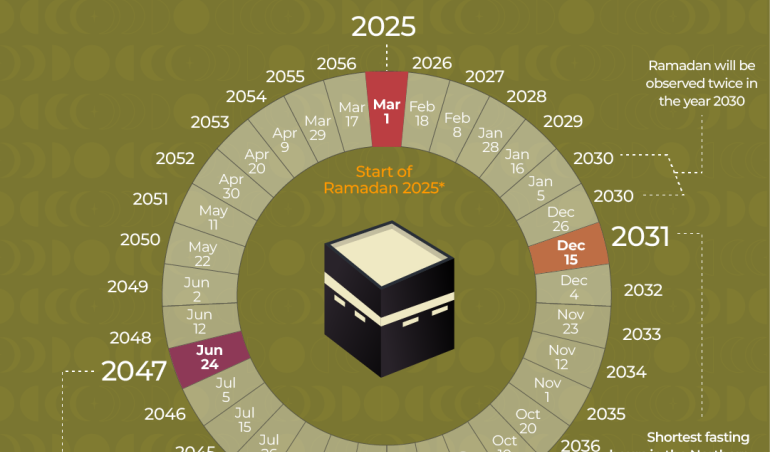
Fig: Ramadan Dates

Since the lunar year is approximately 354 days long, it is about 11 days shorter than the solar year used in the Gregorian calendar. As a result, Ramadan shifts earlier each year and gradually moves through different seasons over time.

This cycle means that Muslims experience Ramadan under varying weather conditions and daylight durations across the years. For example, in some years fasting occurs during long summer days, while in others it takes place during shorter winter days.

Meanwhile, Muslims living south of the equator are expected to experience longer fasting hours compared to last year. Due to the difference between lunar and solar calendars, Ramadan will also occur twice in 2030 — first beginning on January 5 and then again on December 26.